
Pollution from vehicles, engines, and fuels dramatically reduced while achieving economic growth
Over forty years of clean air policies have improved air quality and improved the health of Americans, and the environment. Since 1970, EPA has set and implemented emissions standards to control pollution from everything from passenger vehicles, heavy duty trucks and buses, construction and farm equipment, locomotive and marine engine and even lawn and garden equipment. These standards are a critical part of the progress and improved air quality we have achieved despite increased economic activity and more miles traveled on average per person.
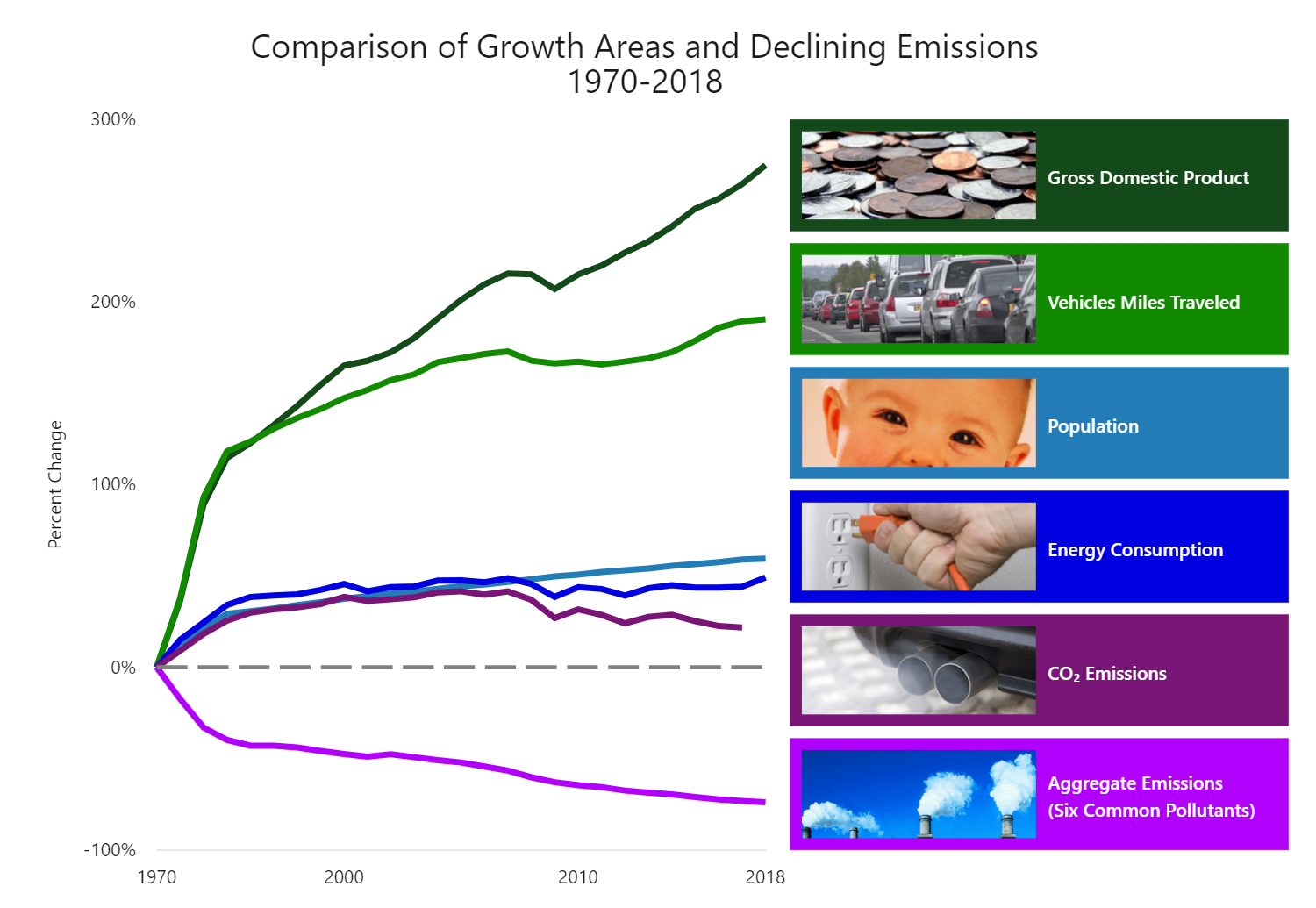 Note: CO2 emissions estimate through 2013 (Source: 2014 US Greenhouse Gas Inventory Report)
Gross Domestic Product: Bureau of Economic Analysis
Vehicle Miles Traveled: Federal Highway Administration
Population: Census Bureau
Energy Consumption: Dept. of Energy, Energy Information Administration
Aggregate Emissions: Air Pollutant Emissions Trends Data
Cleaner Cars, Trucks, and Fuels
Compared to 1970 vehicle models, new cars, SUVs and pickup trucks are roughly 99 percent cleaner for common pollutants (hydrocarbons, carbon monoxide, nitrogen oxides and particle emissions). New heavy-duty trucks and buses are roughly 99 percent cleaner than 1970 models.

Lead Removed from Gasoline
Motor vehicles were once the major contributor of lead emissions. EPA began to phase out lead in gasoline starting in the 1970’s and leaded gasoline was fully prohibited after 1995. As a result, levels of lead in the air decreased by 94 percent between 1980 and 1999.
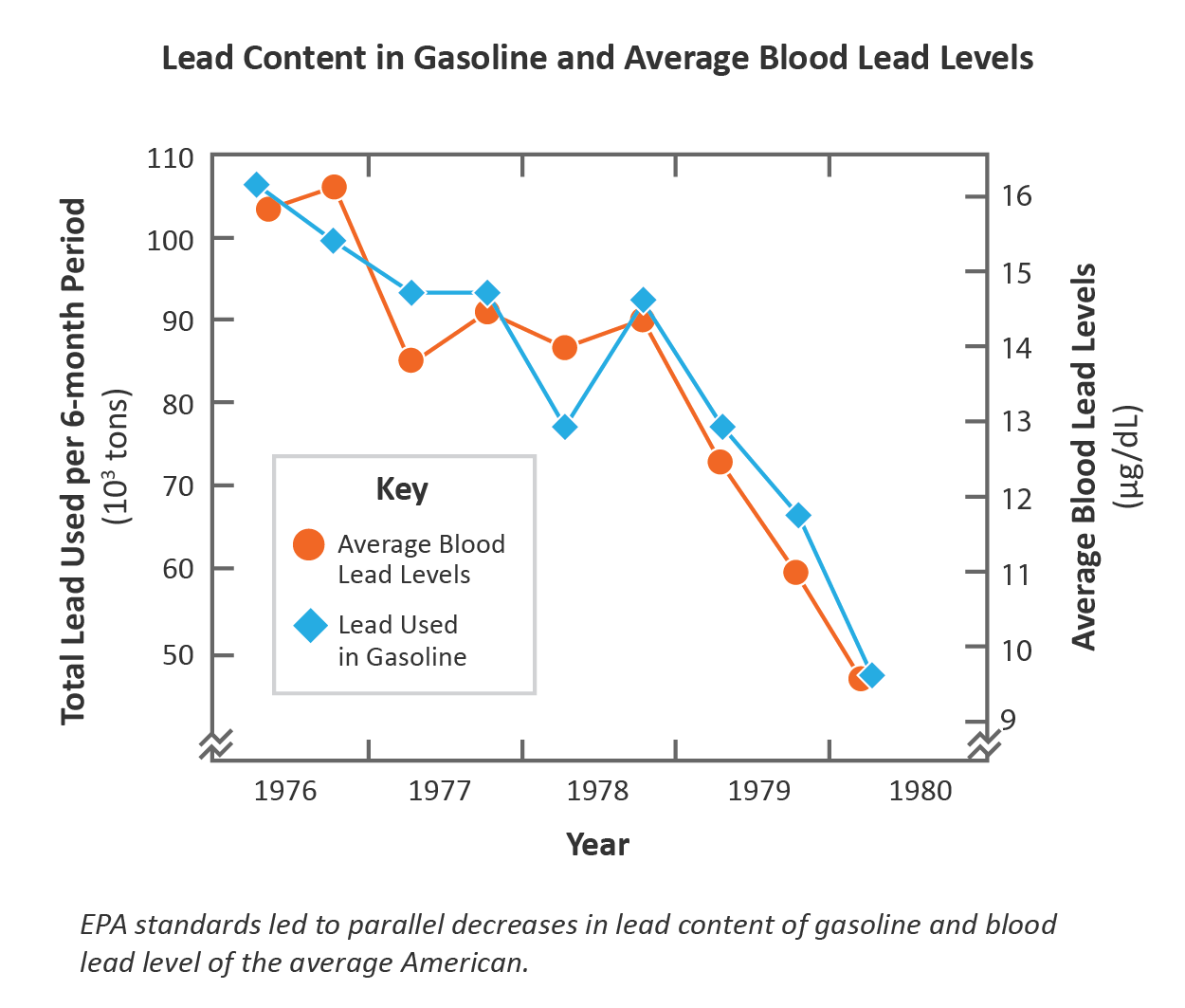 Source: USEPA/Environmental Criteria and Assessment Office (1986).Learn more:
Spurring Innovation in Cleaner Cars, Trucks, and Fuels
EPA vehicle emissions standards directly sparked the development and implementation of a range of technologies.The automotive catalytic converter, in particular is considered to be one of the great environmental inventions of all time.
Emissions standards led to the adoption of many modern automotive technologies—computers, fuel injection, and on-board diagnostics—resulting in cars that are not only much cleaner, but also higher quality, more reliable, and more durable.
The vehicle emissions control industry employs approximately 65,000 Americans with domestic annual sales of $26 billion1.
1https://www.epa.gov/clean-air-act-overview/clean-air-act-and-economy#technology
Contributions to the U.S. Economy
Efforts to reduce air pollution from transportation have proven to be cost effective. For every one dollar spent on programs to reduce emissions, the American people receive nine dollars of benefits to public health and the environment.